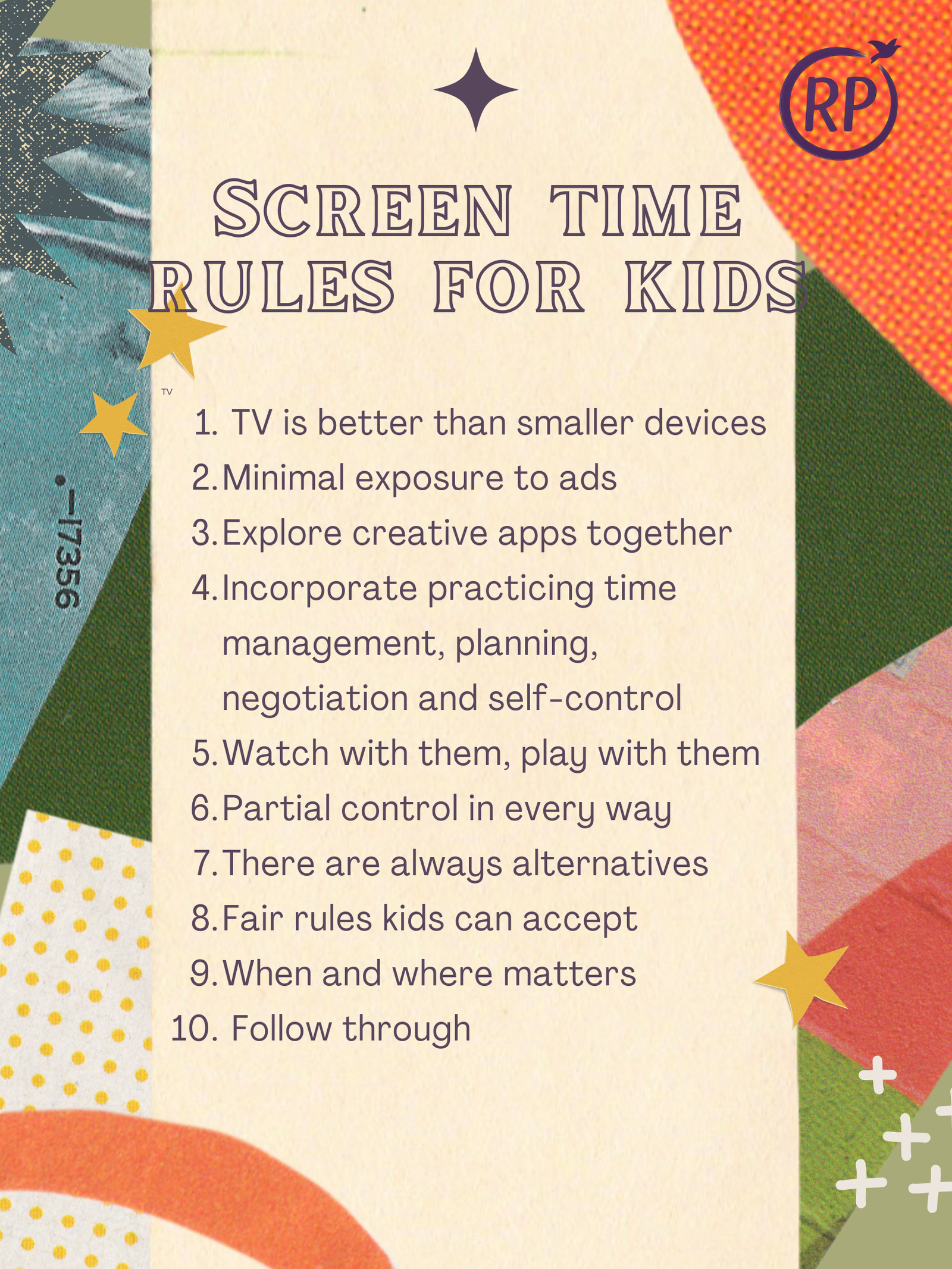
Screen time rules

TV is better than smaller devices
Hand-held devices allow children more control and distractions. It is so easy to click ads and other videos and shorts on algorithms which can lead to rabbit hole of unfiltered media. Movies and shows that have a storyline can actually provoke great family discussions and reflections.
Minimal exposure to ads and shorts
They are alluring. Ads on tablet/phone games also keep them in the loop longer.
Explore creative apps together
Screen experience can be shared and enjoyed together. Try introducing creative apps and exploring them as a family activity. Pinterest, Canva, or procreate are great apps to start!
Incorporate practicing time management, planning, negotiation and self-control
Screen is unavoidable to some extent and a powerful motivator for many kids. Instead of fighting that reality, we can use this as an opportunity to teach important skills like presenting their case to negotiate, and using time effectively.
Watch with them, play with them
One of the best ways to learn about our kids’ interests and strengthen connection is to be interested in their favourite shows and games. This will also make screen time more of a shared experience than something to be hidden.
Partial control in every way
Especially with younger children, discreet monitoring is important. Show interest and offer supervision when they start a new show or a game. Make sure parental permission is required before downloading any new app.
There are always alternatives
Making alternative options easily accessible plays a key role in preventing screen time from becoming their default leisure activity.
Fair rules kids can accept
As kids get older, leaving room for negotiations goes a long way. They don’t have to like the screen rules, but when they feel heard and have some say, they are far more likely to respect the boundaries over time.
When and where matters
Ideally screen time can happen after doing responsibilities and in a shared space like the living room. Screen right after waking up and alone behind the closed bedroom door tend to create habits that are not as supportive in the long run.
Follow through and good modelling
Kids don’t respect rules we don’t and learn most from our actions than our words.
Tags: Screen time with kids
Leave a Reply