Teaching children how to reflect

Reflection sounds like a complex skill that young children would not be able to grasp. However, deep concepts can be simple in action. Reflection can be defined by reviewing deeply about personal experiences, actions, feelings, and/or decisions.
Younger children can start with answering simple questions. The first step is to help them take a look at past events instead of letting them fleet away. Questions like below encourage them to pause and have a quick review of what happened.
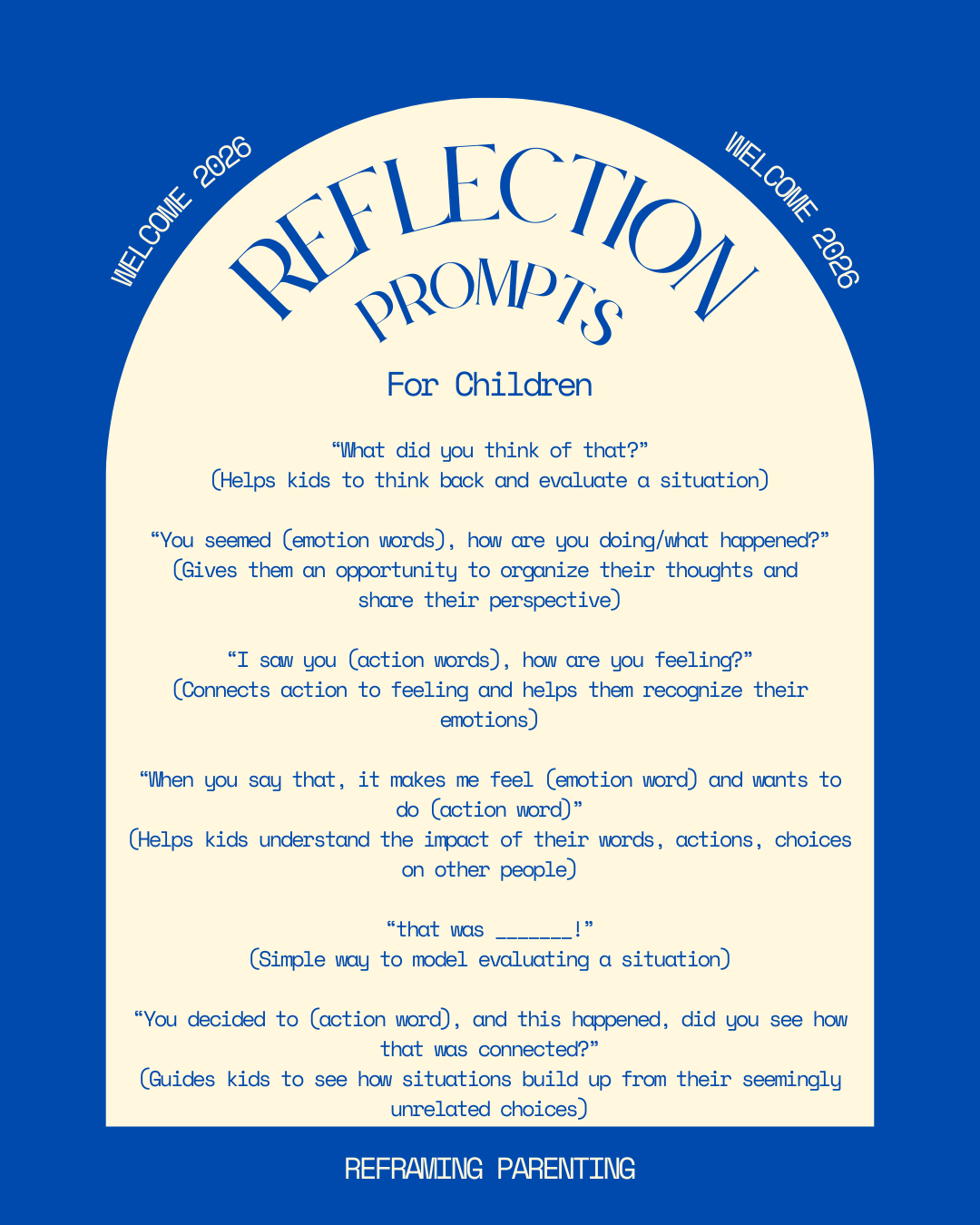
The younger kids are, the more input from adults is needed in a way that the child still would agree. Though they may not be able to clearly articulate, their engagement in the conversation or reactions to our thoughts will tell us how they reflect on the situation. One important caveat is that children’s engagement and reactions don’t need to be big or long. It definitely doesn’t need to be serious sit-down talk. Sometimes, a genuine “ohhh” reveal how they made a connection that they hadn’t seen before the talk. It is a good way to end the conversation with a positive feeling of epiphany.
With more mature children, conversation can or may need to go deeper. Offering space for them to do their own reflection would mean allowing them to disagree with us and giving them things to think about rather than what to think. We want to avoid “should-ing” our older kids. Instead, we want to share our insights and similar past experiences of ours. We want to remind them of meaningful values, different perspectives and new ways to look at the situation.
For any lessons to truly stick, the experience needs to feel good for them. When children experience meaningful moments of realizations, feel a relief after big emotions, or find clarity through proper processing, their comfort with reflection grows. As parents, we can support them by giving them as many opportunities as possible to practice.
Leave a Reply